
CASSA
  • About
  • People
    • Core and Associate Members
    • Administrative Staff
    • Graduate Members and Affiliates
    • Student Research Assistants
    • Interns and Undergraduates
    • Alumni
    • Jobs
  • Research
    • Research Areas
    • Research Projects
    • Publications
    • Instruments
      • Timaeus HPC
      • TART Map
  • Teaching
    • Minor in Astronomy and Astrophysics
    • Abekta
  • Outreach
    • Durbin
      • Astrophotographic Images
      • Durbin Manual
      • Volunteers
      • Updates
    • In Bangla
      • ক্লাসিকেল কথা
      • নতুন কথা
      • সহজ কথা
      • দূরের কথা
  • Events
    • Calendars
    • CASSA Colloquium
    • CASSA Workshops
    • Journal Talk
  • News
  • Click to open the search input field Click to open the search input field Search
  • Menu Menu

PrimaBERA: Primary Beam Effects of Radio Astronomy Antennas

The goal of our project PrimaBERA is to maintain EIDOS (a software described below) and extend it to include the models of many other modern radio telescopes.

The observations of a radio telescope is a multiplication of its primary beam (reception equivalent of the radiation pattern) and the sky in the Fourier plane, meaning the observation is a convolution of the beam and the sky. Aside from this convolution the image created by a radio telescope is also modulated by the beam. In order produce high-quality images (good resolution and dynamic range), removing the effects of the primary beam is essential. The objective of PrimaBERA is to make usable and lightweight models of the primary beams of various radio telescope antennas using analytical functions.

Ihenaetu et al. (2019) published a sparse representation (model) of the primary beams of the Karl G. Jansky Very Large Array (VLA) located in New Mexico, USA. Asad et al. (2021) used the same technique to publish a model of the primary beams of MeerKAT, the “meer” Karoo Array Telescope located in the Karoo region of South Africa. A python package for such modeling called EIDOS was also released.

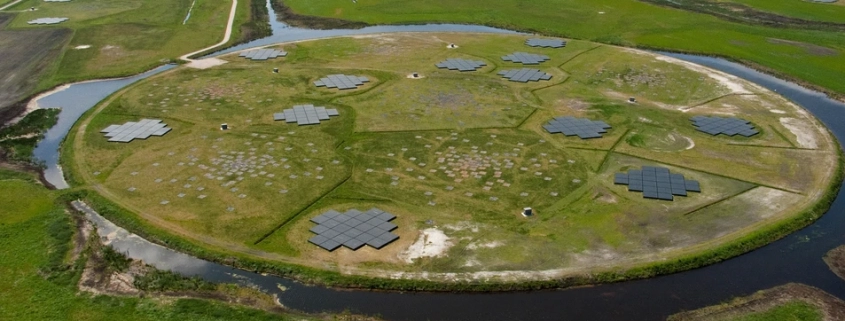
Currently we are working on creating a sparse representation of the primary beams of LOFAR in synergy with the CHronOS project.

Supervisor: Khan Asad.

June 2026
S M T W T F S
 123456
78910111213
14151617181920
21222324252627
282930  
« May    

Categories

Archives

© Copyright - CASSA, Independent University, Bangladesh - powered by Enfold WordPress Theme
  • Link to Facebook
  • Link to Mail
  • Link to Instagram
  • Link to LinkedIn
Link to: MiMiC: Mining Minihalos in Clusters of Galaxies Link to: MiMiC: Mining Minihalos in Clusters of Galaxies MiMiC: Mining Minihalos in Clusters of Galaxies Link to: CHronOS: Cosmic Hydrogen Observation and Simulation Link to: CHronOS: Cosmic Hydrogen Observation and Simulation CHronOS: Cosmic Hydrogen Observation and Simulation
Scroll to top Scroll to top Scroll to top