CASSA
  • About
  • People
    • Core and Associate Members
    • Administrative Staff
    • Graduate Members and Affiliates
    • Student Research Assistants
    • Interns and Undergraduates
    • Alumni
    • Jobs
  • Research
    • Research Areas
    • Research Projects
    • Publications
    • Instruments
      • Timaeus HPC
      • TART Map
  • Teaching
    • Minor in Astronomy and Astrophysics
    • Abekta
  • Outreach
    • Durbin
      • Astrophotographic Images
      • Durbin Manual
      • Volunteers
      • Updates
    • In Bangla
      • ক্লাসিকেল কথা
      • নতুন কথা
      • সহজ কথা
      • দূরের কথা
  • Events
    • Calendars
    • CASSA Colloquium
    • CASSA Workshops
    • Journal Talk
  • News
  • Click to open the search input field Click to open the search input field Search
  • Menu Menu
You are here: Home1 / Minor in Astronomy and Astrophysics2 / AST 301: Introduction to Astrophysics

AST 301: Introduction to Astrophysics

A 3-credit course offered as part of the Minor in Astronomy and Astrophysics (A&A), and also available as an elective for students pursuing a major in Physics.

This course is part of two tracks within the Minor in A&A: the Data-Intensive Astronomy (DIA) track and the Space and Planetary Science (SPS) track. The necessary mathematics and physics are introduced from the ground up, ensuring accessibility for students from diverse backgrounds, including physical and life sciences, electrical engineering, and computer science.

Prerequisite: Familiarity with calculus and willingness to learn more calculus during the course.

Course Content

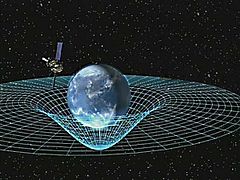
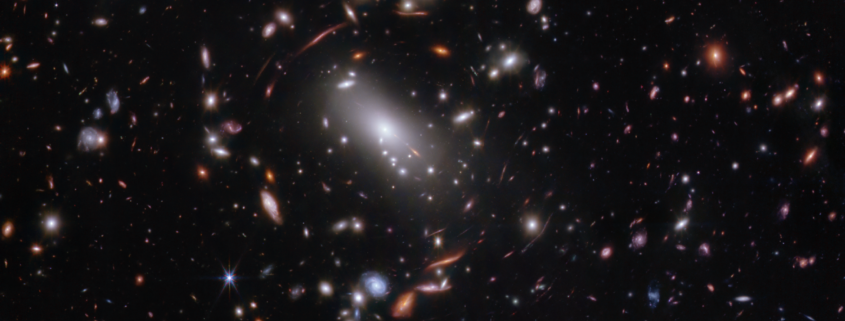
Gravity

How does gravity bend spacetime and light? Why are planetary systems and spiral galaxies flat, but planets and stars round? How gravitational lensing magnify objects. How are gravitational waves detected?

Electromagnetism

How is light or electromagnetic wave produced through the acceleration of charged particles? How do astronomical objects emit light at wavelengths ranging from radio to gamma ray?
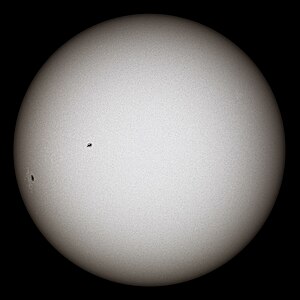
Blackbody

What is a blackbody and why are stars blackbodies? Which objects emit through the blackbody mechanism? How did Planck’s law solve the ultraviolet catastrophe? How is blackbody radiation measured?
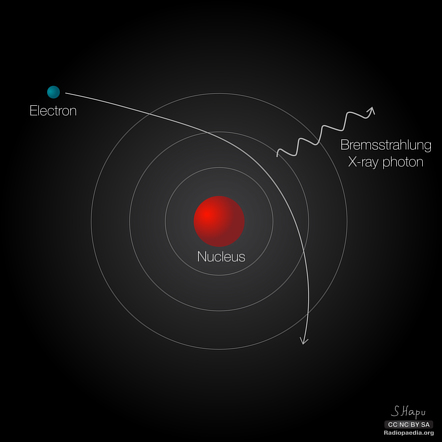
Bremsstrahlung

When does an astronomical plasma emit light via bremsstrahlung mechanism instead of blackbody mechanism? How to measure bremsstrahlung? Emissions from the intracluster medium (ICM) of a cluster of galaxies.

Synchrotron

Which astrophysical phenomena give rise to light via synchrotron mechanism? How is special relativity used to explain this mechanism? Explain synhrotron jets from supermassive black oles.

Spin-flip

How does neutral hydrogen emit light of a specific wavelength via the spin-flip mechanism? How can we map our galaxy using this radiation? How to create timelapse maps of the whole universe using this light?

Keystone Project

Simulate the cosmic hydrogen of different periods of the universe using Python.

Textbooks

  1. Peter Schneider, Extragalactic Astronomy and Cosmology: An Introduction, Springer, 2006.
  2. Andre Liddle, An Introduction to Modern Cosmology, 3rd edition, Wiley, 2015.
  3. Hale Bradt, Astrophysics Processes: The Physics of Astronomical Phenomena, Cambridge University
    Press, 2008.
  4. Bradley Carroll & Dale Ostlie, An Introduction to Modern Astrophysics, 2nd edition, Cambridge
    University Press, 2017.
June 2026
S M T W T F S
 123456
78910111213
14151617181920
21222324252627
282930  
« May    

Categories

Archives

© Copyright - CASSA, Independent University, Bangladesh - powered by Enfold WordPress Theme
  • Link to Facebook
  • Link to Mail
  • Link to Instagram
  • Link to LinkedIn
Link to: AST 201: Introduction to Astronomy Link to: AST 201: Introduction to Astronomy AST 201: Introduction to Astronomy Link to: AST 401: Planets and Planetary Systems Link to: AST 401: Planets and Planetary Systems AST 401: Planets and Planetary Systems
Scroll to top Scroll to top Scroll to top