
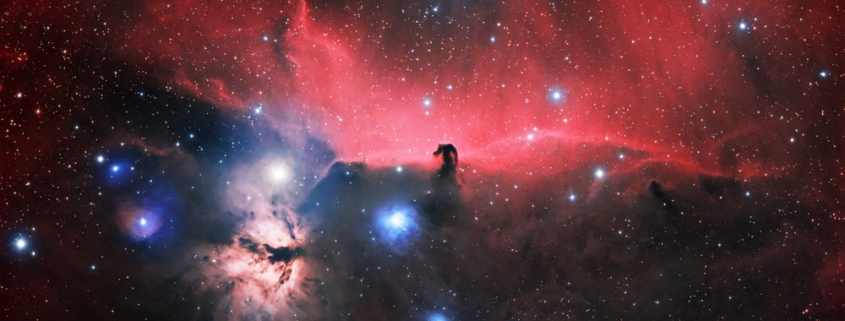
AST 201: Introduction to Astronomy
A 3-credit course offered as part of the Minor in Astronomy and Astrophysics (A&A), and also available as an elective for students pursuing a major in Physics.
This course is part of two tracks within the Minor in A&A: the Data-Intensive Astronomy (DIA) track and the Space and Planetary Science (SPS) track. The necessary mathematics and physics are introduced from the ground up, ensuring accessibility for students from diverse backgrounds, including physical and life sciences, electrical engineering, and computer science.
Prerequisite: None.
Course Content
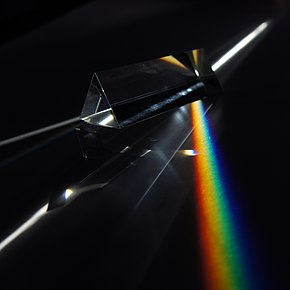
Light
What is light and how does it travel? What are the quantities used for measuring light? How uncertain are the measurements?
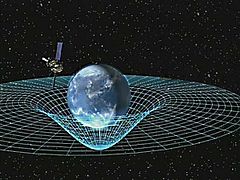
Spacetime
What are the standard coordinate systems for locating celestial objects? How to measure their distance and velocity? How are these measurements stored?

Telescopes
How to make mirrors for visible-light telescopes? How do the mounts and drives vary from ground to space? An overview of observatory engineering.

Detectors
How are photons converted to electrons by a detector? Overview of different types of detectors. How does a charge-coupled device work?
Photometry
How are astronomical images produced by computers? How are the data from detector arrays preprocessed and combined? Photometric systems. Atmospheric effects.
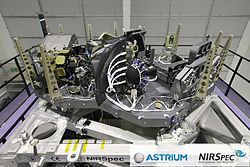
Spectrometry
How is light dispersed to produce a spectrum? How to make spectrometers with slits, splits or fiber? How to interpret spectrometric data?
Keystone Project
Take images of nebulas, star clusters and galaxies using a small robotic telescope (shown below) and measure the sizes of these astronomical objects from the images using geometric relations.
Textbooks
- Frederick R. Chromey, To Measure the Sky: An Introduction to Observational Astronomy, Cambridge University Press, 2010.
- Hale Bradt, Astronomy Methods: A Physical Approach to Astronomical Observations, Cambridge University Press, 2004.
- Fundamental Astronomy, edited by H. karttunen et al., 6th edition, Springer, 2017.
- M. Shane Burns, A Practical Guide to Observational Astronomy, CRC Press, 2022.

