

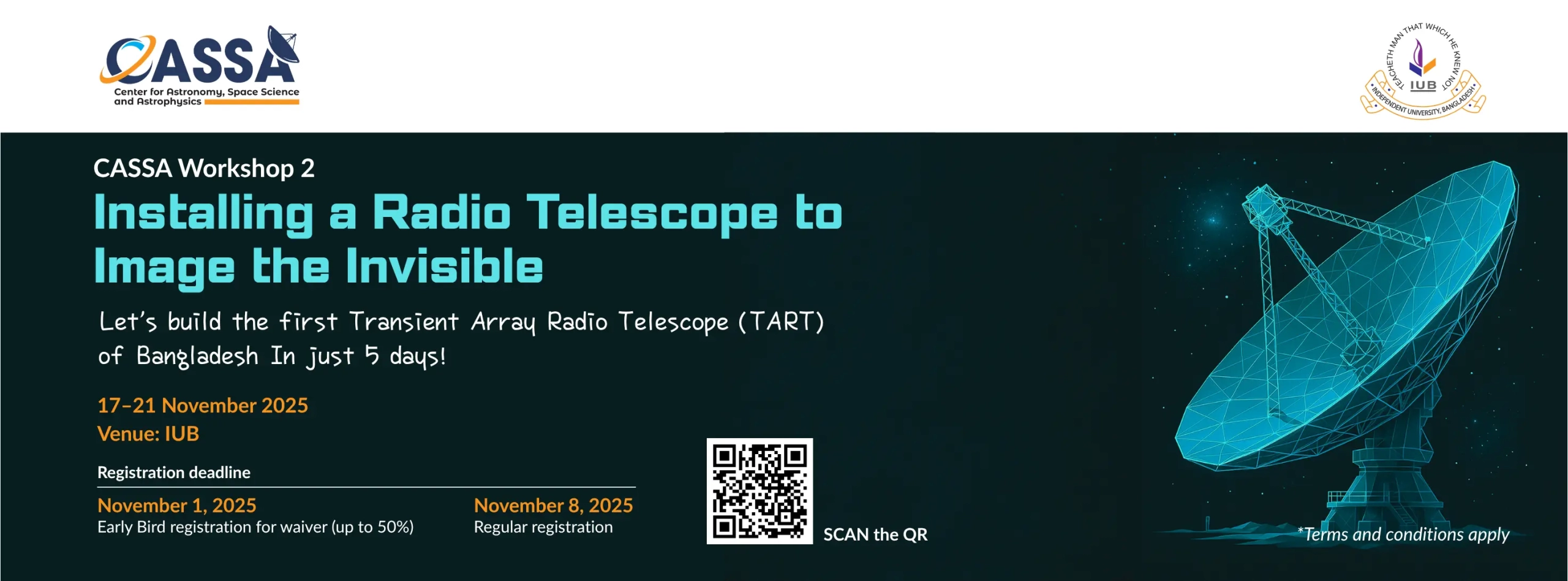
Installing a Radio Telescope to Image the Invisible

CASSA Workshop 2: Join the Installation of Bangladesh’s first Transient Array Radio Telescope (TART), from 17–21 November 2025

Building on the success of CASSA Workshop 1: Unclouding the thousand eyes of an Array Radio Telescope, we are organizing CASSA Workshop 2 from 17–21 November, 2025. This will be a 5-day workshop dedicated to the installation of a Transient Array Radio Telescope (TART)—for the first time in Bangladesh. TART has been designed by a New Zealand team led by Dr. Tim Molteno, who will be visiting Bangladesh to lead this workshop. TART is being used by South African Radio Astronomy Observatory (SARAO) for teaching and capacity building of radio astronomy throughout southern Africa (the TARTs are shown in this map)—where the world’s largest radio telescope, Square Kilometre Array (SKA), is under construction.

In these five days, the participants will learn the basics of radio astronomy and array radio telescopes and get hands-on experience in installing a TART on the rooftop premises of CASSA and creating images from the visibilities of the telescope. TART is a small prototype of large telescopes like SKA, and the participants will also learn how to scale up their understanding of TART to large-scale telescope. The workshop is relevant not only for astronomy enthusiasts, but also for engineering and science students from many other fields, because the construction and use of radio telescopes involve people from many different branches of science and engineering. Modern array radio telescopes (ARTs) enable cutting-edge research in electronics, antenna design, and AI-driven data science.

To establish a consistent academic standard for CASSA workshops, a registration fee of 5000 BDT will be charged for Workshop 2—unlike the two-day Workshop 1, which was completely free. However, participants may apply for up to a 50% waiver based on academic merit. Please see the detailed program below and follow the instructions in the last section of this page to submit your application through the Google Form.
Program

Subject to minor changes

Instructors (in-person)

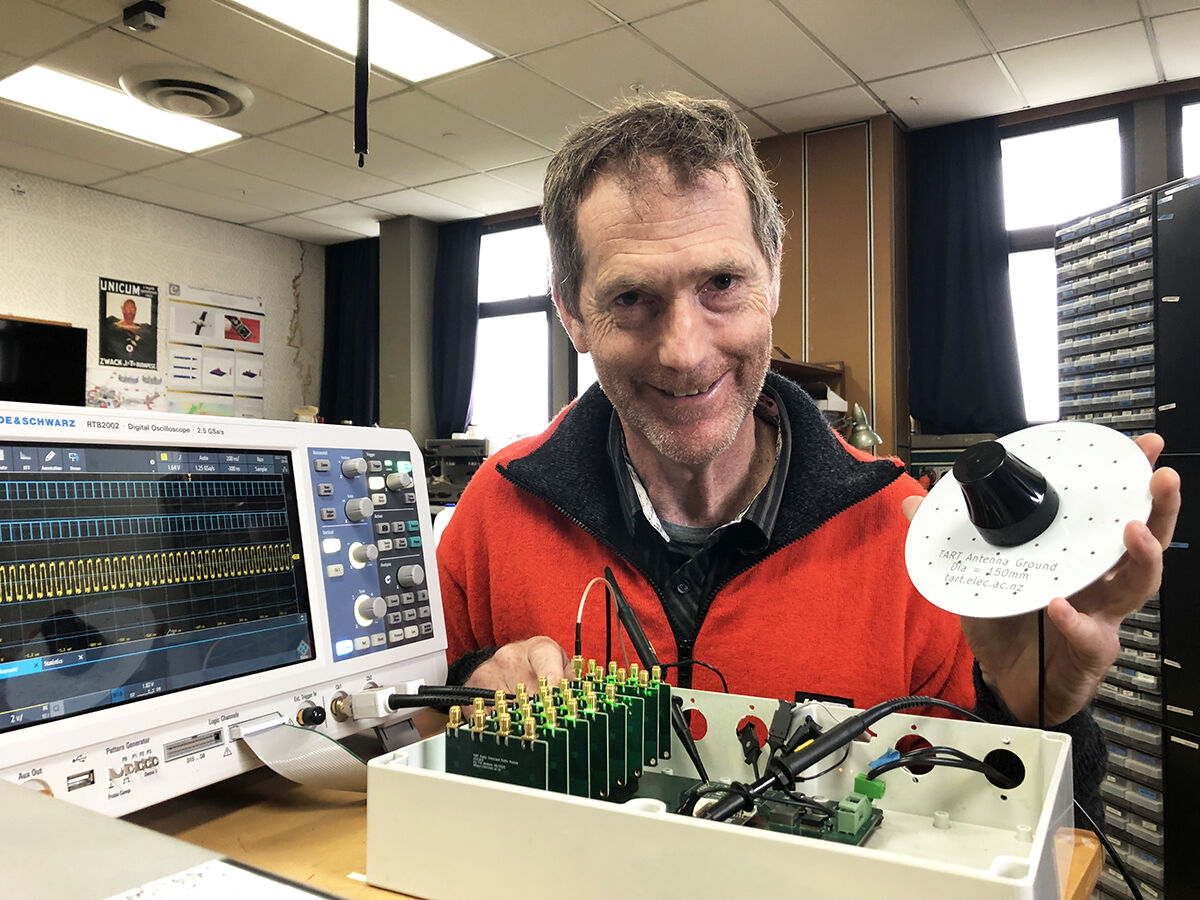
Tim Molteno, PhD

Tim Molteno, PhD

Senior Lecturer, University of Otago, New Zealand

Dr. Molteno has a PhD from Otago in nonlinear dynamics and topological analysis of chaotic systems This was followed by postdoctoral work at the University of Toronto in nonlinear systems. He then worked in Boston for Sapient Inc, a high-tech consulting firm. What started as an idea in 2014 by Dr. Molteno to develop the world’s smallest radio telescope in his Department of Physics lab, is now being rolled out across eight partner nations of the Square Kilometre Array project in Southern Africa!

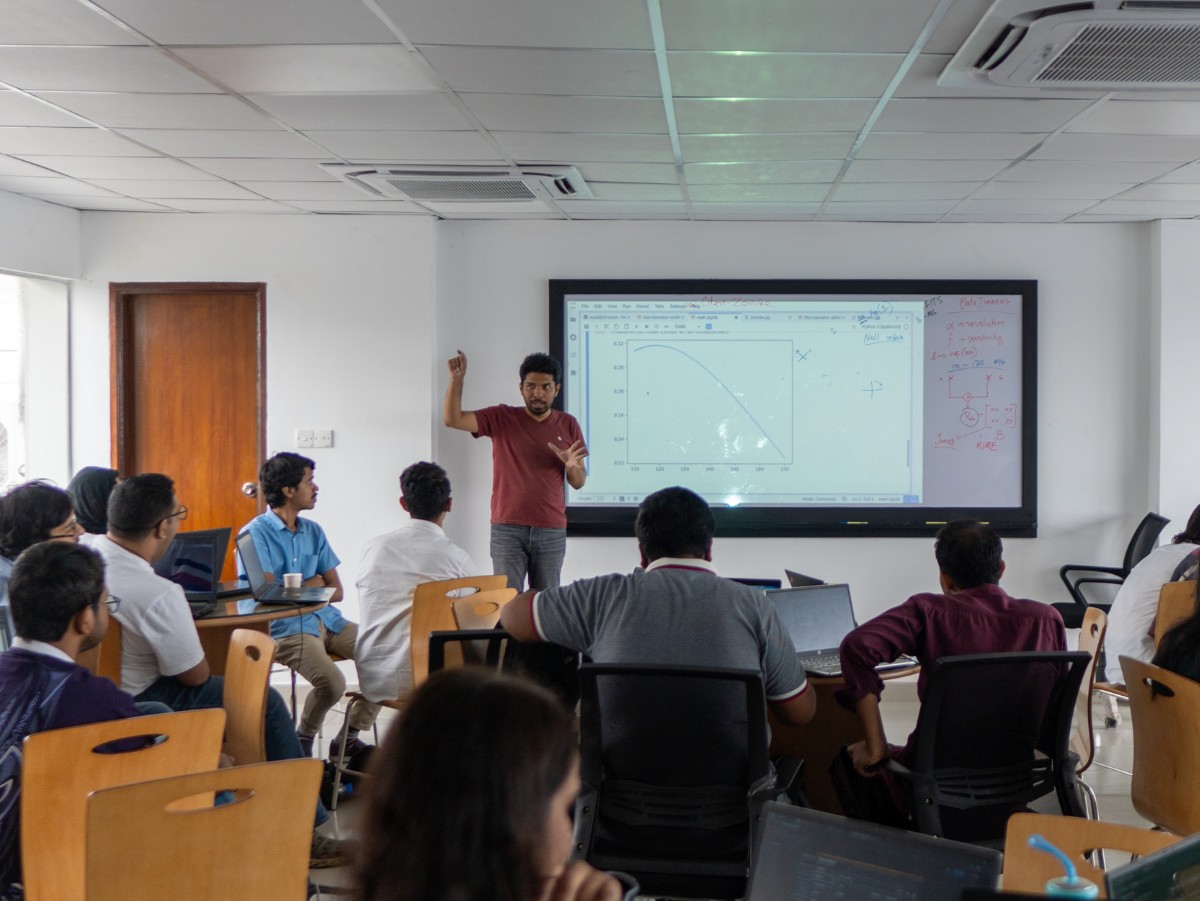
Khan Asad, PhD

Khan Asad, PhD

Assistant Professor, Independent University, Bangladesh

Dr. Asad did a PhD in radio astronomy from University of Groningen, The Netherlands, with LOFAR, and postdoctoral work at South African Radio Astronomy Observatory with a precursor of the Square Kilometre Array (SKA). His work focuses on observing the most faint cosmic signals using array radio telescopes. He joined Independent University, Bangladesh, in 2020, and established the first astronomy research center of the country in 2025. He aims to take CASSA to the next level through global collaborations.

Outcomes of the workshop

By the end of this workshop, you will be able to

  1. Understand how a modern array radio telescope work.
  2. Participate in the installation of a radio telescope on the rooftop premises of CASSA.
  3. Create images from the observed visibilities of a radio telescope.
  4. Simulate the observations of cosmic hydrogen by SKA.

Transferable skills:

Scientific reasoning · Electronics and networking · Simulation and data analysis on a high-performance computer

Registration and Application

A total of 45 applicants will be selected for in-person participation at the CASSA Office, situated on the rooftop of Independent University, Bangladesh (IUB), in Bashundhara R/A, Dhaka.

Around 50% of the seats will be reserved for women.

The important dates are given below.

Event Date
Early-bird registration deadline (for fee waiver) 1 November 2025
Regular registration deadline 8 November 2025
Payments due for early applicants 11-14 November 2025
Late registration deadline 15 November 2025
Workshop group works 17-21 November 2025
Final presentations 28 November 2025
Report submission (each of the 9 groups of 5 need to submit a short report online) 5 December 2025
Issuing of certificates (based on an evaluation of the presentations and reports) 12 December 2025